
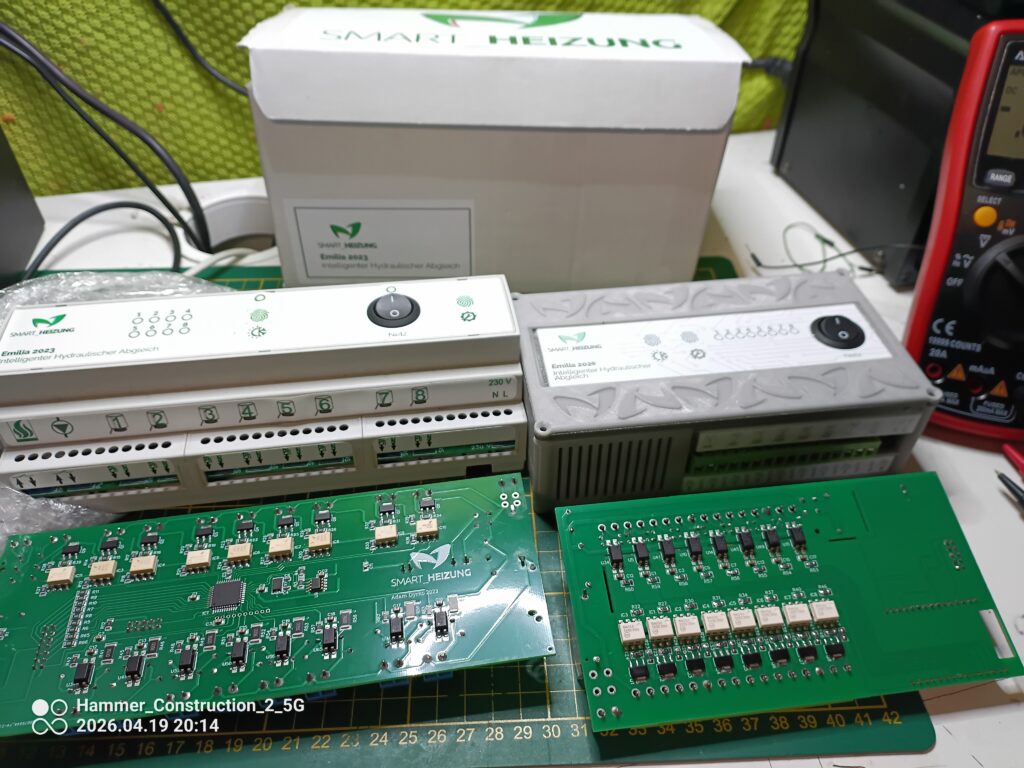
In this photo you can see the previous generation of Emilia2023 and the new Emilia2026 (the smaller one). Here you can see that the bigger one may not always be more.
I got such a strange question in @ .. in what language is emilia2026 encoded and what language is worth learning in my opinion .. The easiest way would be to answer: I don't know. Of course, that's not true. I know in what language Emilia is encoded. I know what each of the more than twenty files of its code is doing .. Only that it does not matter .. more in the blog in a few days :) And the work on the tester to test Emilia comes to the final stages. The code has been around for quite a long time. There is a refinement of the website and a change in the way the saved data is transferred. Today, however, in about two hours, we added the latest test scenarios. We have added an interesting scenario of checking how Emilia will handle the control of the work of energy-stealing circuits (short, with poorly set flow) with long circuits, which will be 'violated' by 'thieves' without Emilia.
   It's almost 11 p.m. and I just finished the AI session where I finally managed to get the room temperatures the same as in the real room. All layers of concrete, all temperature transitions between the centers have finally started to behave as they should. But it doesn't come by itself. Thousands of calculations, calories flying and joules. Differential equations .. I know again why I was learning them;) The session lasted from 10 o'clock, i.e. 13 hours. Even the coffee was in progress. This fragment of the code took us 4 days of working at the laptop screen and dozens of hours of thinking about the solution and dressing the idea in words so that AI knew exactly what was going on. once euphoria and after a moment of testing again not such a graph .. and all over again and again ...
  But in the end it is !!!
  Satisfaction with the effect, but also fatigue. Tomorrow we will add the possibility of changing the power put into circulation and we will approach the end of an important stage. Without the testing module, it would be difficult to supervise the science of Emilia2026.
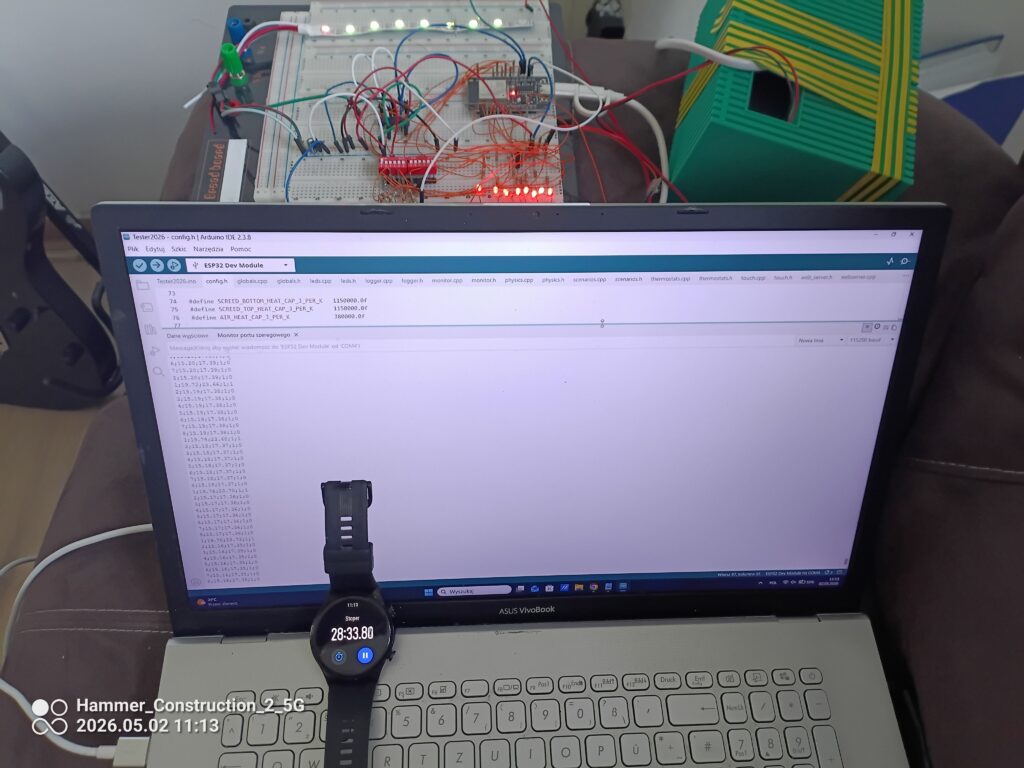
2V 2026 Downloading base temperature graphs. 10 times acceleration of time made life easier. This is how the picnic flies. In the morning, a short session with AI, refinement of the possibility of changing the type of houses and then recordings of changing floor and air temperatures in the room. There are interesting conclusions from this to be described on the website.
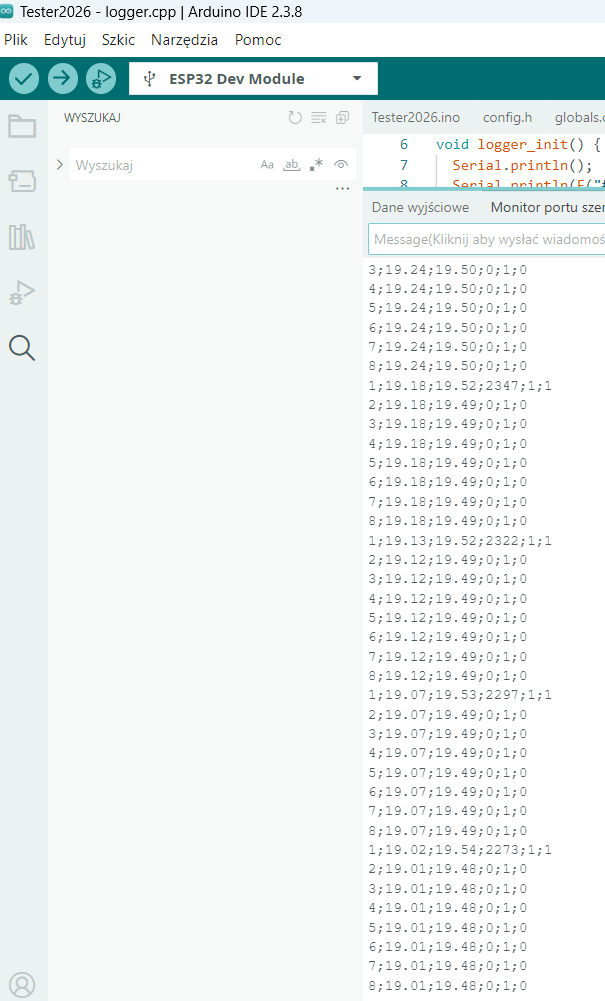
Today, only a few cosmetic changes in the tester, but as a result, the building simulator began to provide further important information, the conclusions of which I will describe on the blog. temperature to work .. but now it will be easier for me to explain to new clients what the problem is. And by the way, somehow it has not taken my attention over the years. Plan for today: Collect and compare data from the cycle after a night depression and without such a reduction. I collect measurements every 20 seconds, which is 200 seconds in normal time.
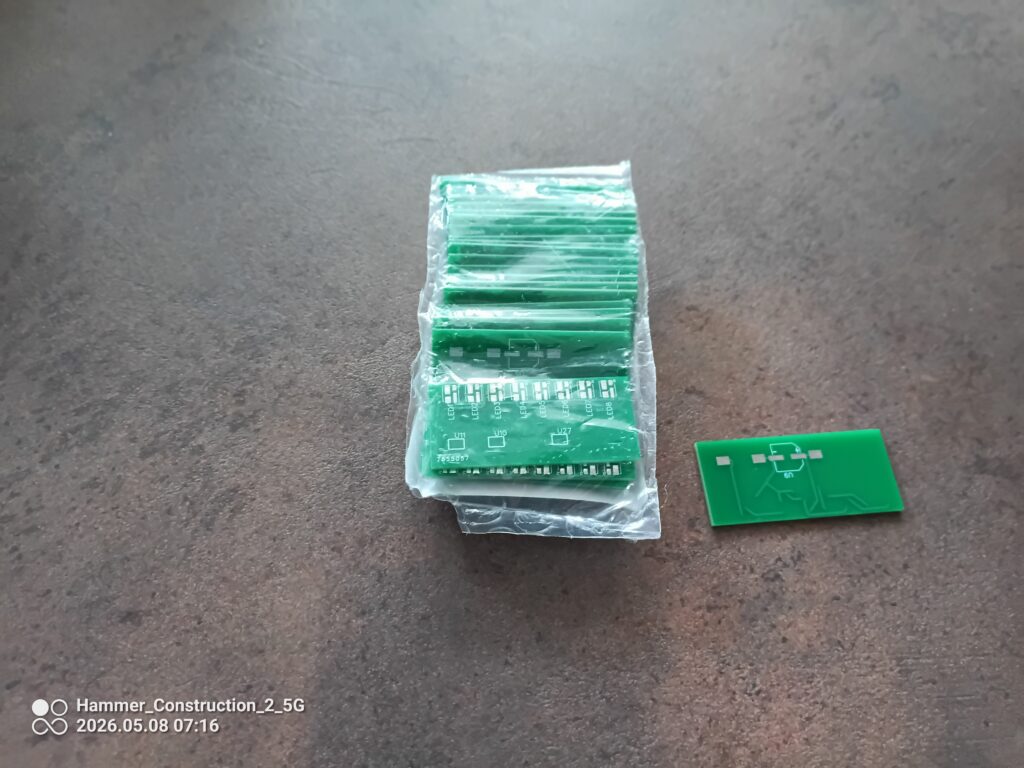
May 8, 2026
Today, the penultimate printed circuit boards to Emilia2026 have arrived. They will be responsible for signaling the state of the module. I’m just waiting for the tiny tiles that will be in the role of touch pads. They will be there next week.
May 19
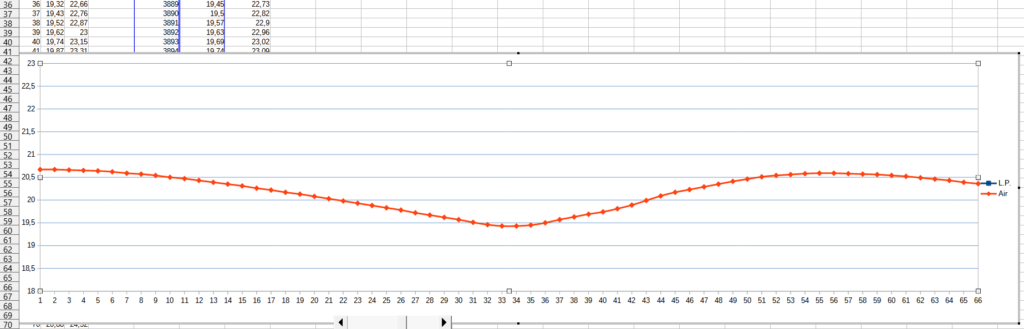
I couldn’t believe it myself when I looked at the chart from the last 6,200 measurements. Emilia has learned to control the loops so well that when the thermostat turns off the loop at 20.5°C, the room overshoots by only 0.1°C!!! The learning process took 17 hours (at 40x accelerated speed). There is nothing left to do here but run a long-term test, and then we can move on to the next stages. In the meantime, new plotter blades have arrived, which I will use to cut the rest of the stencils for applying solder paste to the PCBs.
Here you can download the file with the chart.
It shows the indoor air temperature (included in the data along with the floor temperature – NOT THE CONCRETE LAYERS!). The heating is controlled by a thermostat. Setpoint temperature: 20.0 °C, thermostat hysteresis: ±0.5 °C.
By scrolling through the chart, you can see how the temperatures change and by how much they rise above 20.5 °C after the thermostat turns off. The process starts after the “night setback.” It clearly shows how little sense it makes to lower the temperature in a room with surface heating – and that is putting it mildly.
To anticipate any questions: The data is collected from the building simulator/Emilia tester. The Emilia2026 module has no access to this data! It operates according to its own logic, and the effects are visible on the chart.
The record (admittedly, achieved only once so far) is an overshooting of just 0.04 °C! However, there have already been quite a few instances of overshooting by less than 0.1 °C. Thanks to the logging of 6,200 records from a multi-hour test, you can see how quickly the Emilia2026 module learns and what sensational results it achieves. There is really not much room for improvement here.
But the tests are not over yet. We are starting the next phase of learning. We will connect Emilia with highly diversified heating circuits so she can learn how to handle short circuits, which “steal energy” from longer ones due to lower resistance.
The idea, design, and calculations are entirely my own, but the results achieved so far surprise me just as much as anyone else familiar with the subject.
Enjoy viewing and analyzing! 🙂